

Looking for Hope and Finding It
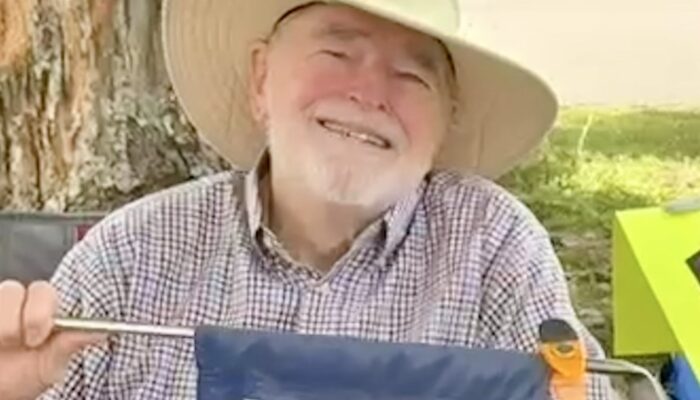
by Patrick R. Anderson, editor
Good news seems to be in short supply for me these days. Hopeful words of encouragement and inspiration get lost like water from a leaky faucet trickling into a vast desert. Meanwhile, the steady flow of malfeasance and prevarication almost washes me away me like water from a fire hydrant blasting water on already saturated soil. “Try to be more positive, look on the brighter side,” I am told. Okay.
For this issue, I have found some silver linings behind the troubling storm clouds of current events. While many other examples exist, I confess to not having sufficiently sought them heretofore. I offer calm and assuring words from two companions on the challenging journey that writers and readers of Christian Ethics Today travel. One is from a sister I met recently. The other is from a brother I have known for several years. Both are pastors.
I met Sarah Thomas, associate rector of Trinity Episcopal Church in Santa Barbara, California, while reading her sermon on the Diana Butler Bass podcast, The Cottage. My wife Carolyn had shared the written version with me as she often does. Sarah described the “awe that came upon everyone,” as recorded in Acts 2:43-47, or what she called “the spiritual high” the early believers experienced at Pentecost. The full sermon is published below, and I encourage everyone to read it. Part of what caught my attention is this:
During Holy Week this year, four humans left Earth, launched into space at 25,000 miles-per-hour to achieve a first for humanity: a mission around the back side of the moon. Some of you followed it closely. Some of you may have missed it in the flood of everything else. I’ll admit, I was captivated. …I was riveted to the live feed because the way they were all speaking to each other was so different from what I’ve become accustomed to hearing in public discourse. Apparently, I have become accustomed to snark, mistrust, disrespect, competition. But now I was hearing something different. There was humor. Competence. Supportive clear communication. Real teamwork. The mere words “copy that” made me tear up a little. (They said it a lot.) “Copy that”: “I hear you. I believe you. I will address that.” The Artemis II mission didn’t just show us space. It showed us our better selves.
The second example comes from another podcast that I regularly listen to, The Bulwark, hosted by former Republican political operative and commentator Tim Miller. Miller conducted an hour-long conversation with U.S. Senator and Ebenezer Baptist Church pastor, Raphael Warnock. I first met Warnock several years before he entered electoral politics, when we were both invited by fellow Baptist, Jimmy Carter, to meet regularly with him and others as part of Carter’s project, “A New Baptist Covenant,” which in part sought to address the harmful and counter-productive divisions between the disparate understandings of the Gospel by those claiming the name “Baptist.” Representatives of all the Baptist denominations in America, except the Southern Baptist Convention, participated in these meetings. Carolyn and I worshipped at Ebenezer while we were in Atlanta for almost a year.
In the Bulwark conversation, Raphael Warnock addressed his personal approach to the Gospel of Jesus, the place of faith in public policy, and the role of religion in a free society. He spoke candidly about these things. When I first listened to that conversation, I found myself smiling, saying things out loud like “Yes!” “That’s right!” “Preach it, Brother Raphael!” ”Oh, my! I wish I’d said that!”
I came away from that experience joyful, hopeful, encouraged, motivated, elevated, inspired, blessed. I encourage everyone to listen to the podcast, or if you cannot, ask me for a transcript. I think you will be glad you did.
Tim Miller asked Warnock about what motivated him to run for the Senate, and now to serve:
Well, you know, look, I’m a pastor. I’m a Christian. And my faith is what drove me into this work. And the issues that you hear me talking about—health care, dealing with poverty— these are things that I talked about from my pulpit long before I entered a race for the Senate… you know, the scripture says everyone who cries Lord, Lord doesn’t mean that they’re going to enter in. And Donald Trump is many things. A man of faith, he certainly is not. And I think he mocks God. I think Donald Trump in the secret moments when behind closed doors, laughs at religious people. He’s deeply cynical. He doesn’t believe. He doesn’t believe in anything other than himself and his own self-aggrandizement and self-enrichment; and, if religion gets in the way of that, he and J.D. Vance…they’ll throw the Pope, the faith and everything else under the bus. I think Democrats should not be shy in owning their faith. There’s a way to live out one’s faith and talk about it that does not force it upon others in the public square.
So, part of what it means for me to be a person of faith is to recognize that I live both in my faith and under the law. And that this grand experiment we have, as we approach the 250th anniversary of the U.S., is that we are a diverse, multifaceted democratic republic that creates space for people to live freely in their various faith traditions. I think I owe it to the covenant we have with one another to speak up every time Islam is condemned and Muslims are condemned just for being Muslims, and to stand up for my Jewish sisters and brothers, and for those who claim no faith tradition at all…Here’s how my faith lives in my work.
It’s reality; it’s not my creed. When I come to this office to do this work, it’s not my creeds that I bring to the work. It’s my values: Love, justice-making, truth-telling, empathy, centering on the poor. And guess what? Those are values that are resonant in all of the great faith traditions and in people of moral courage who claim no faith at all. The covenant we have with one another is that we ought to be able to engage in that conversation in a respectful way and hopefully create something that looks like the kingdom of God, a country that’s big enough to embrace all of our children.
Tim Miller asked about how he talks with his children about his jobs and the situations he faces:
I mean, I talk to them, but first of all, I just try to model the life that I want them to live. And I try to model kindness and love, and I teach them to respect their neighbor. And they learn about the faith. They’re sitting there listening to their dad preach. They’re not impressed.
It’s in those quiet moments when I’m sitting with my daughter and my son, as my parents did with me right before bedtime, when I read the stories of our faith to them and we pray together and you hope that in the midst of that they get it, they catch it.
I think they’re more likely to catch it than my giving it to them. And so, I try to live my life in a way that they catch what gives their dad hope even in a dark moment like this.
Selah.




Leave a Reply
You must be logged in to post a comment.
Scan the QR code below to join our exclusive Substack community—subscribe for free or choose to support us with a donation! Just another great way to enjoy and share the journal.