

The Heart is a Little to the Left
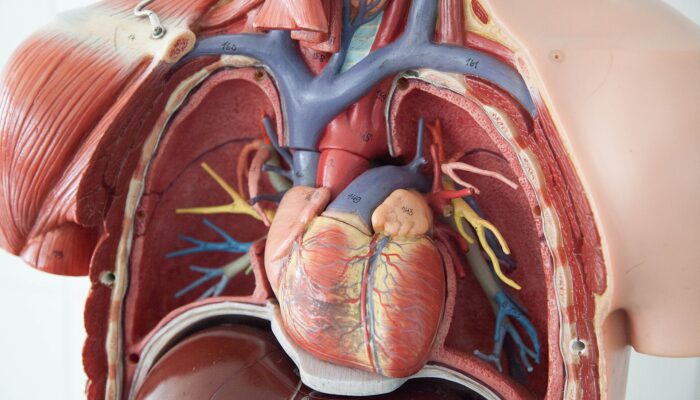
(Photo by Hikmet Gümüş through Wikimedia Commons)
By Walter B. Shurden
I walked up to the clerk, a late-50-ish woman, at Barnes & Noble in Macon, Georgia, and said, “I want to order five copies of William Sloane Coffin’s book, The Heart is a Little to the Left.” She did not respond with, “Yes, of course,” or “Give me the author’s name again,” or “I will be glad to help you.” She exclaimed with spontaneous delight, “Oh! What a gorgeous title!”
When I returned several days later to collect my order, the same clerk waited on me. “I am here to get my five copies of the book by William Sloane Coffin, The Heart is a Little to the Left.” She said, “I remember you. I read it. It’s marvelous. I ordered copies for each of my three grown children.”
I was proud of myself. My unintentional evangelism had reaped benefits.
In his book — the full title of which is The Heart is a Little to the Left: Essays on Public Morality — Coffin recounts a time when he heard Archbishop Helda Camara of Recife, Brazil, speak. With a broad smile and charmingly accented English, Camara said, “Right hand, left hand — both belong to ze same body, but ze heart is a little to the left.”
Like Coffin and Camara, I, too, believe that the heart is a little to the left.
Coffin’s book addresses seven subjects: (1) the spiritual benefits of higher education, (2) the politics of compassion, (3) homophobia, (4) the authority of the Bible, (5) self-righteousness, (6) war, and (7) democracy. It is a brief book, only 81 pages. But here is my selling point to you: it was published in 1999, a quarter of a century ago, but it reads like it was published yesterday.
At our monthly “Four-for-Lunch Bunch” on July 10, 2025, Dan, Kenny, Stan, and I gathered to discuss the book. Because I had read it a couple of times previously, I decided this time I would use Coffin’s magical words to craft prayers for us to share before the meal. In preparation, I wrote my prayers on the blank pages of Coffin’s book, using first-person pronouns. I will use plural pronouns below, because I want to include all of us. Coffin’s words are in italics and the pages quoted from the book are in parentheses.
As I share this now with you, I ask, “Hear these prayers, O Lord,” — 26 years later.
Dear God, we confess that the way we are cutting taxes for the wealthy and social programs for the poor, you’d think the greedy were needy and the needy were greedy. (22)
We confess also, Lord, that the proposed school vouchers . . . are but disguised welfare
checks for the rich, many of whose children are already in private schools at the expense of the public school system. (22)
Eternal God, teach us that if we are to be equal to the times we live in and to the problems
the future will bring, we had better learn to scorn trifles and engage the essentials: love of You, our neighbors, and Your world. (ix)
Forgive us, O God, as we craft tax breaks for billionaires while claiming that the sky would fall were the minimum wage raised to anything approaching a living wage. (x)
And teach us also that if we want peace, we will have to work for justice . . . that justice is the ethical test of any form of spirituality. (ix, 2)
Hear our confession, O God: All of us tend to hold certainty dearer than truth. We want to learn only what we already know; we want to become only what we already are. (3)
Let wonder keep dazzling us. (3)
We praise you, O God, that Your prodigal love insists that we get not what we deserve but what we need — forgiveness and a fresh start, that there is more mercy in You than sin in us. (11)
Teach us that if we fail in love, we fail in all things else. (12)
Forgive us, Merciful One, our limited sympathies and unlimited certainties. (29)
Forgive us, also, when our fears have blown out the lamp of reason. (30)
We confess to You, Loving Lord, that homophobia is the last “respectable” prejudice in America.
Keep before our eyes that gravestone of a Vietnam veteran in a Washington cemetery:
When I was in the military, they gave me a medal for killing two men and a discharge for loving one. (27, 37)
We thank You for Holy Scripture, that we read the Bible because the Bible reads us . . . our excuses . . .our envy . . . our promise-making . . . our promise-breaking.
But teach us that the authority of the Bible does not mean the infallibility of the Bible and that the Bible is a signpost, not a hitching post, that it points beyond itself to God. (41,42, 49)
Let us not forget, O Lord, that it is a mistake to look to the Bible to close a discussion, for the Bible seeks to open one. You have led with a light rein, giving us our heads and minds. (49)
Teach us again in America, every Fourth of July, that the best patriots are not uncritical lovers of their country, any more than they are the loveless critics of it, that true patriots carry on a lovers’ quarrel with their country, a reflection of Your eternal lovers’ quarrel with the world. (57)
Reframe our consumerism, Lord, for we pay for that we don’t need, and we need things that we are not willing to pay for.
Forgive us, Holy One, we’ve become the people of the bomb. (62) Do not, we pray, permit our technology to surpass our humanity. (63) Before another generation dies, let us see all nuclear missiles beaten into homes for the homeless and land for the landless, into day care centers and good schools for our poorest kids and compassionate care for our elderly. (66)
We confess that [w]e did not make the planet, we do not own the planet, and we have no right to wreck the planet. (65)
O God who is more comfortable with diversity than we are, help us not to fear our differences but to celebrate them. We acknowledge that people everywhere are today very much alive to their own nationality, ethnicity, race, gender, and sexual orientation — all those legitimate differences within our common humanity.
Teach us that we are significant as individuals so that we may learn to serve a greater whole. (69, 70)
We thank you, Mighty God, that our freedom is real. Help us to use Your gift of freedom not to do as we please, but as we ought. (78)
Amen.
— Walter “Buddy” Shurden is Emeritus Minister at Large, Mercer University. He and his wife, Kay, live in Maryville, TN. Buddy calls this post his Episodic Email from the Smokies, 1:2 July 20, 2025.




Leave a Reply
You must be logged in to post a comment.
Scan the QR code below to join our exclusive Substack community—subscribe for free or choose to support us with a donation! Just another great way to enjoy and share the journal.