

When Churches Are No Longer Sanctuaries: An Immigrant Theologian-Pastor’s Reflection
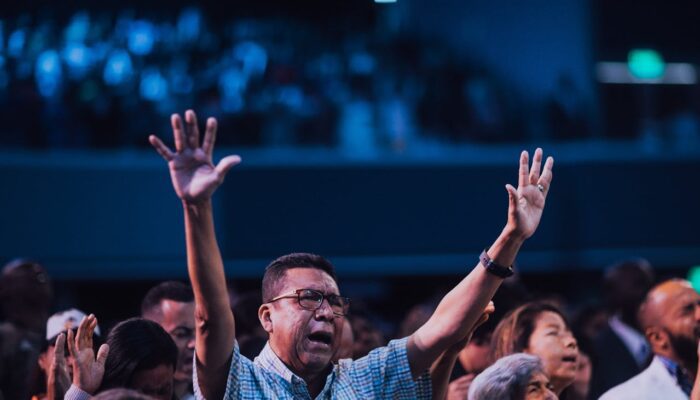
(Photo by Luis Quintero)
By Eunil David Cho
As a Korean American, I grew up in an immigrant church, and I still serve one today. For many immigrants, the church is far more than a religious institution. It is a lifeline. It is where members gather not only on Sundays, but also daily for morning prayer. It is where we eat Korean food after service, speak our mother tongue, and celebrate our cultural traditions. Above all, it is a place of belonging, a sanctuary where different generations of Korean immigrants experience safety, dignity and support as they navigate the precarious realities of life in America.
Recently, I heard the alarming news that ICE (Immigration and Customs Enforcement) agents had entered the property of a Korean immigrant church in my hometown. Armed and masked, they were seeking “illegal” immigrants, intimidating clergy, staff and lay leaders who had gathered to worship God. Feeling anxious and upset, I immediately thought of my parents and church elders. I had known that ICE raids have been taking place in places of worship, especially within immigrant congregations. But the news from my hometown struck me intensely. In that moment, my immigrant church no longer felt safe. It was as if I had lost my sense of home completely, left wrestling with the haunting question: If we cannot feel safe in our churches, where can we go?
Unfortunately, ICE agents have been targeting migrants, both with and without documentation, in and around places of worship across the country. Churches are no longer sanctuaries. Hispanic and Spanish-speaking congregations, in particular, are experiencing the hardest impact nationwide.[1] Out of fear of immigration raids, many of these churches have seen in-person attendance decline drastically and are now rethinking about how worship services are delivered.[2] In response to this disorienting situation, for instance, Bishop Alberto Rojas of the Diocese of San Bernardino told his diocese of about 1.2 million people that they could stay home on Sundays to avoid Mass as concerns about immigration sweeps loom.[3] Much like the time of the pandemic, alarmed church members are relying on online platforms to attend worship and on smaller gatherings for Bible studies and prayer.
While responding to this crisis and caring for their members, pastors and church leaders themselves are not safe from ICE raids either. On July 21, many were shocked to learn that Daniel Fuentes Espinal, a pastor from Maryland, was arrested by ICE while visiting a local restaurant. After his arrest, Fuentes Espinal was taken to the Winn Correctional Facility in Louisiana. The reason for his arrest was a visa overstay. Fuentes Espinal had been trying for many years to obtain a green card for permanent residency while he and his family endured what they described as a “bureaucratic nightmare.”[4]
Recently, on August 18, Pastor Fuentes Espinal was finally granted bond and released from the detention center. His family and his congregation at Iglesia Del Nazareno Jesus te Ama were overjoyed to welcome him back. His family friend, Len Foxwell, explained that they would continue working to secure the pastor a green card. “Pastor Fuentes Espinal is a pillar of our community…He has been here for 24 years, has never been charged with a crime and, more importantly, he’s been the moral and spiritual center of a tight-knit community on the Eastern Shore,” Foxwell said.[5] Foxwell’s words underscore how Pastor Fuentes Espinal’s arrest was a traumatizing experience, not only for him and his family, but for the entire community that he has faithfully served for more than two decades. In a time when churches are no longer sanctuaries, the potential loss of the presence of spiritual leaders adds further complexity and depth to the fear and uncertainty that many immigrant communities of faith are experiencing today.
Refuge, Respectability and Resources
For immigrant communities, religion is central. Particularly in North America, congregations are more than places of worship; they function as social, cultural and socioeconomic anchors in the lives of immigrants. American sociologist Charles Hirschman explains that immigrant congregations in North America serve three primary functions: (1) refuge, (2) respectability, and (3) resources.[6] First, migrants attend and join churches to seek refuge, filling psychological voids and finding a sense of belonging. Hirschman notes that “the search for refuge by immigrants has been for physical safety as well as for psychological comfort.”[7] Second, churches affirm the respectability of immigrants. For historically minoritized communities in the United States, churches have been places that “provide respectability or opportunities for status recognition and social mobility that is denied in the broader society.” [8] Third, churches have played a central role in meeting the practical needs of immigrant communities by providing a wide range of resources.
Nevertheless, in a time like this—when members are unable to worship together out of deep fear and may permanently lose their spiritual leaders—churches can no longer fulfill these roles. This presents a new challenge for immigrant churches. Throughout the long history of exclusion and marginalization, churches were among the few places upon which immigrants could rely for help in navigating sociocultural and political challenges. Churches were once considered “sensitive places,” alongside hospitals and schools, where ICE officers were restricted from making arrests. However, the current administration revoked this policy on January 21, 2025,[9] and now ICE raids may invade and disrupt places once regarded as sanctuaries. For centuries, churches were seen as relatively safer spaces. That is no longer the case, at least in the United States today. Churches are increasingly unable to fulfill their pastoral and prophetic roles of offering refuge, respectability and resources to their members and surrounding communities.
An Invitation for Non-Immigrant Churches
Then what can churches that do not identify as “immigrant churches” do to respond? Of course, many ecclesial and denominational bodies have protested, rallied, chanted and prayed publicly in response to these inhumane raids. Yet, in the face of today’s renewed ICE enforcement actions and immigration raids, such public witness can also be risky. Christian pastor and immigration activist Doug Pagitt explained, “Up until this term, churches and faith leaders were considered off-limits for ICE agents, so it was easier [for churches] to stand up and be pro-immigrant…The fact that churches are not off-limits anymore and ICE can enter churches puts a whole other burden on this situation.” [10]
While public protest and marches remain important for raising awareness and holding the government accountable, Pagitt emphasized that what immigrant churches need most at this time is community building and solidarity through relationships and partnerships, sharing and providing “information, resources, and support” so that these congregations in crisis can continue to serve as sanctuaries for their communities.[11] Indeed, many immigrant congregations are already taking significant steps to make worship and fellowship safer, especially for undocumented members, removing service times from websites and signage, increasing security measures, creating a rapid response team, and teaching people their constitutional rights both at home and in the congregation. In other words, immigrant churches are already taking extraordinary measures to protect their sanctuaries.
Here lies the invitation for non-immigrant faith communities: If we truly believe God calls us to welcome the stranger, protect the vulnerable, and love our neighbors, then we must take the time to get to know immigrant church pastors and leaders in our local areas. Connect with them through your presbytery, diocese or conference, listen to their stories, and discern together how you can meet their needs. Although immigrant churches may appear similar from the outside, their racial, ethnic and cultural particularities mean they experience the same crisis in different ways. For example, Spanish-speaking congregations and Korean immigrant churches are likely facing this reality through distinct challenges, requiring different kinds of responses and support from other faith communities.
Solidarity begins with small but intentional steps: listening, learning and showing up. Non-immigrant churches do not need to have all the answers, but they do need to be present, offering space, sharing resources and lending their voices alongside immigrant congregations, thereby helping to reduce the fear they are experiencing. The message immigrant churches need to hear is not “Don’t be afraid!” but rather “If you are afraid, we are here to listen and help.” If immigrant churches are already taking extraordinary measures to protect their communities, then non-immigrant churches must take extraordinary measures of solidarity. In a time when fear threatens to close doors, God is calling the Church to open new ones. This is not only an act of justice, but also an act of faith, trusting that God’s Spirit moves most powerfully when we stand together in radical love.
—Rev. Dr. Eunil David Cho is assistant Professor of Spiritual Care and Counseling at Boston University School of Theology. He is also an ordained Minister of Word and Sacrament and served as moderator (2023–2024) of the Synod of the Mid-Atlantic in the Presbyterian Church (USA). He is the author of Undocumented Migration as a Theologizing Experience (Brill, 2024).
_________________________________
[1] Deepa Bharath, “How Latino Evangelical Leaders Are Preparing for Possible Immigration Enforcement in Churches,” PBS NewsHour, February 7, 2025, https://www.pbs.org/newshour/nation/how-latino-evangelical-leaders-are-preparing-for-possible-immigration-enforcement-in-churches.
[2] Maria Santos, “Latino Churches Rethink Services Amid Immigration Raid Fears,” NBC News, April 7, 2025, https://www.nbcnews.com/news/latino/latino-churches-immigration-raids-fears-deportation-rcna199982.
[3] Hannah Fry, Christopher Buchanan, and Andrew J. Campa, “A Crisis of Faith: ICE Raids Force Some Churches to Take ‘Extraordinary’ Action,” Los Angeles Times, July 11, 2025, accessed August 31, 2025, https://www.latimes.com/california/story/2025-07‑11/la‑me‑church‑sweeps‑worship
[4] Alaa Elassar, “ICE Detains Maryland Pastor Over Visa Overstay,” CNN, July 25, 2025, https://edition.cnn.com/2025/07/25/us/ice-maryland-pastor-fuentes-espinal.
[5] JT Moodee Lockman and Caroline Foreback, “Maryland pastor returns home a month after being detained by ICE agents,” CBS News, August 18, 2025, https://www.cbsnews.com/baltimore/news/maryland-immigration-pastor-fuentes-espinal-returned-ice-arrest/
[6] Charles Hirschman, “The Role of Religion in the Origins and Adaptation of Immigrant Groups in the United States,” International Migration Review 38, 2004, 1206–1233.
[7] Hirschman, 1228.
[8] Hirschman, 1229.
[9] See U.S. Department of Homeland Security, “Statement from a DHS Spokesperson on Directives Expanding Law Enforcement and Ending the Abuse of Humanitarian Parole,” press release, January 21, 2025, U.S. Department of Homeland Security, last modified March 21, 2025, accessed August 25, 2025, https://www.dhs.gov/news/2025/01/21/statement-dhs-spokesperson-directives-expanding-law-enforcement-and-ending-abuse.
[10] Adrian Carrasquillo, “Exclusive: The Churches Fighting Back Against ICE,” The Bulwark, August 20, 2025, https://www.thebulwark.com/p/exclusive-the-churches-fighting-back-against-ice.
[11] Carrasquillo, “Exclusive: The Churches Fighting Back Against ICE.”




Leave a Reply
You must be logged in to post a comment.
Scan the QR code below to join our exclusive Substack community—subscribe for free or choose to support us with a donation! Just another great way to enjoy and share the journal.